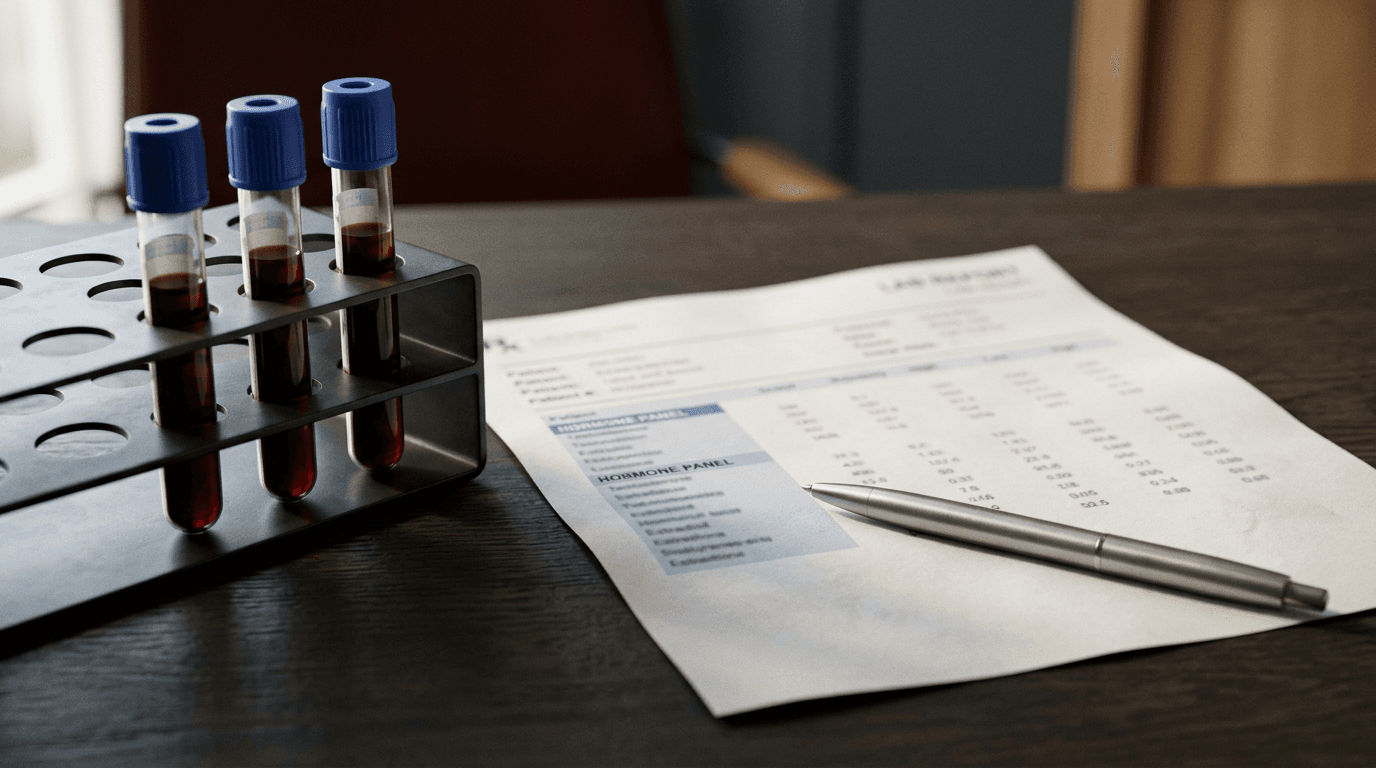
A single total testosterone number explains almost nothing. A 27-year-old with total T at 650 ng/dL can be symptomatic; a 58-year-old at 420 can feel great. The markers that actually predict how you feel are free testosterone, SHBG, and the metabolic labs most TRT clinics skip. Here's what to look at before anyone prescribes.
The markers that matter (beyond total T)
Total testosterone sets the frame; SHBG decides how much is bioavailable. Free testosterone under 6-9 ng/dL (LC-MS, morning draw) predicts symptoms far better than total alone - especially in men with SHBG above 50 nmol/L.
LH and FSH distinguish primary from secondary hypogonadism. Estradiol (sensitive assay), prolactin, and a baseline PSA round out the hormone picture. Skip any of these and you're guessing.
The metabolic side matters too: fasting insulin, HbA1c, ferritin, and a lipid panel. Low T often rides alongside insulin resistance, iron deficiency, or sleep apnea - and those are usually cheaper to fix.
Symptom patterns that rhyme with low T
Low libido, fatigue, poor recovery, flattened mood, and morning erection loss overlap with true hypogonadism - but they also show up with ferritin under 70 ng/mL, undiagnosed sleep apnea, or an HbA1c drifting into pre-diabetes.
Onset matters. Sudden change inside 3-6 months suggests a stressor (sleep, illness, a new medication); gradual decline over years fits the hypogonadism pattern better.
A single low morning draw isn't a diagnosis. We require two separate morning labs (before 10 AM, fasted, repeated at least one week apart) before touching a TRT conversation. Start the Men's Baseline panel to confirm.
What provider review looks for before TRT
Hard screens: baseline PSA, hematocrit, cardiovascular risk (ApoB, Lp(a), lipids), prostate symptoms, sleep apnea history, and fertility goals. TRT suppresses sperm production - fertility-preservation protocols exist but need planning upfront.
Roughly 1 in 3 men with low morning T get routed to sleep study, metabolic work, or weight management before any TRT decision. That isn't stalling - it's how men get their T up without a lifetime script.
On an approved protocol, monitoring runs every 3-6 months: total and free T, estradiol, hematocrit, PSA, lipids. Protocols without monitoring are how men end up in the ER at 40 with a hematocrit over 54%.
What to do now
If symptoms are real and labs are on your timeline, run the Men's Baseline panel - two morning draws, SHBG, free T, LH/FSH, estradiol, ferritin. That's enough data for a provider to route you.
If symptoms are real but labs aren't available yet, book the assessment and we'll sequence the right panel. If sleep quality or metabolic markers are already messy, fix those first - TRT isn't the right first move for everyone.