SIGNAL // LOADING
Loading page
Compare
Five calls members pay real money over. Here’s how we’d choose, what the trial data actually says, and when we’d tell you not to pick either.
Most comparison content online is either affiliate-driven or so cautious it refuses to make a call. Neither helps when you’re deciding between two molecules that cost thousands per year, or two lab panels that differ by a factor of three in price. These guides take a position - and explain the trial data, the guardrails, and the places where the evidence actually tilts one way.
Each guide is structured the same: an honest intro, a row-by-row side-by-side on the dimensions that matter (efficacy, side-effect burden, cost, access, monitoring load), three decision rules in plain language, and a bottom-line call. We cite the trials - SURMOUNT-1, STEP-1, the ADA and AUA guidelines, NAD bioavailability studies - and name them in the sources section at the foot of each page.
If none of the comparisons match your question, the assessment routes you to labs, coaching, or provider review directly. If you want the reference material behind the calls, browse the learn library or glossary.

Average weight loss diverges by roughly six points. Side-effect profiles rhyme but aren't identical. Here's how to pick the molecule that fits your A1c, your GI tolerance, and what's actually stocked in your state - and when the answer is to start with labs instead of a prescription.
See the call
A standard physical panel misses insulin resistance, ApoB, thyroid function, and most hormones - the exact markers that decide whether GLP-1, HRT, or peptides are a good idea. Here's what each panel catches, what it ignores, and how to pick without overpaying for bloodwork you won't use.
See the call
Every week, someone self-prescribes GLP-1 from a sketchy site, orders SARMs off Reddit, or pulls ferritin off their chart and changes nothing. Here's the real line: where going DIY is smart, where provider review is mandatory, and where a self-directed guess turns into a bigger bill.
See the call
Both get marketed as shortcuts to the physique that training and food were supposed to build. One has a legitimate provider-reviewed lane. The other sits on liver-toxicity case reports and the same "for research only" disclaimer that covers nothing if your labs tank. Here's the real line.
See the call
NAD+ gets sold at $400 IV clinics, as $70 subQ injection kits, and as $80 oral NR or NMN bottles. Only two of those options have human data worth quoting. IV is out of ALUKARD's model - so this comes down to subcutaneous injectable or oral precursors. Here's what each actually moves.
See the call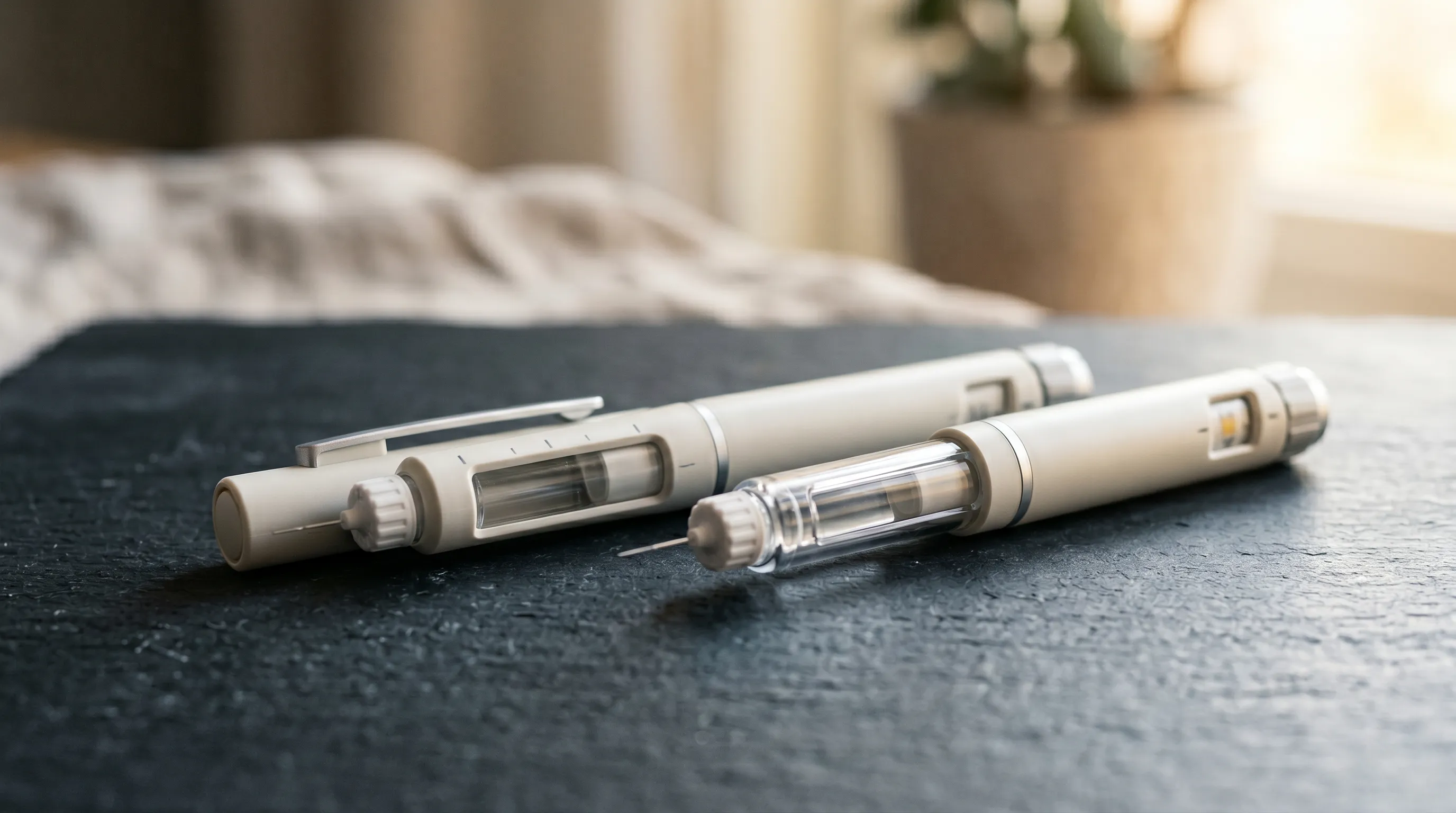
Ozempic and Wegovy are both semaglutide. Same injection, same dose strengths - but one is approved for type 2 diabetes and the other for chronic weight management. That labeling difference drives insurance coverage, supply, and who can prescribe what. Here is how to tell them apart before you waste a week calling your pharmacy.
See the call
Branded GLP-1s are FDA-approved and FDA-reviewed for efficacy. Compounded versions use the same pharmaceutical-grade peptide from a licensed compounding pharmacy, typically at 40-70% lower cost, without the same regulatory review. Both are legal in most states; both have real trade-offs. Here is how to pick without ending up on a Reddit-sourced vial from nowhere.
See the call
Both are PDE5 inhibitors with roughly the same response rate. The difference is the clock. Sildenafil is a short window on-demand option; tadalafil either gives you a 24-36 hour window on demand or a true daily dose that removes timing from the conversation entirely. Here is how to pick, and when the right answer is labs first.
See the call
Cash-pay TRT clinics will prescribe off a single draw and a vibe. Most primary-care offices won't touch it unless your total T reads 200 and you are miserable. Supervised telehealth should sit in the middle: full lab workup, two morning draws, and monitoring that doesn't disappear after the first refill. Here is how the three actually compare.
See the call
Modern HRT has three dominant delivery routes and they are not interchangeable. Transdermal is the safety-first default for most women; oral has a place but carries a different VTE and liver profile; pellets are the convenience path but come with peaks no one wrote a protocol to manage. Here is the route-by-route trade-off before your next visit.
See the call
TRT route choice determines dose control, monitoring burden, and side-effect profile. Injections are usually the most adjustable, pellets the most convenient but least flexible, and cream the most user-dependent. This guide compares where each route fits and where each fails.
See the call
The bioidentical vs synthetic debate is often more branding than physiology. Route, dose, and monitoring quality usually drive real risk differences. This comparison clarifies what molecule identity changes and what it does not.
See the call
Oral semaglutide offers needle-free convenience, but injectable formulations still dominate weight-loss efficacy and dosing flexibility. This guide compares practical adherence, effect size, and who benefits most from each route.
See the call
Both finasteride and dutasteride reduce DHT, but they differ in potency and side-effect profile. This comparison focuses on real-world trade-offs for hair preservation and how to choose based on response and tolerance.
See the call
Minoxidil route choice is a balance between convenience, response reliability, and systemic side-effect tolerance. This guide compares topical and oral approaches for hair regrowth plans under clinical supervision.
See the call
Retatrutide is drawing attention for potent early trial signals, but tirzepatide remains the established clinical pathway with broader real-world use and availability. This comparison clarifies where evidence strength and access currently diverge.
See the call
Both platforms improve access, but they optimize for different outcomes. Hims emphasizes speed and convenience. ALUKARD emphasizes biomarker-first protocol depth and state-gated clinical review. This guide compares what that means for decision quality.
See the call
Ro and ALUKARD both serve telehealth demand, but their operating assumptions differ. Ro leans into broad, efficient pathway delivery; ALUKARD leans into eligibility rigor and protocol cadence. This comparison helps match platform model to your risk profile.
See the call
Function Health is built around broad laboratory visibility. ALUKARD is built around turning biomarker signal into protocol execution. This comparison clarifies when broad testing is enough and when treatment-pathway depth matters more.
See the call
Men who want symptom relief and future fertility often face a key fork: stimulate endogenous production with clomiphene or replace testosterone directly with TRT. This comparison focuses on reproductive implications, symptom control, and monitoring complexity.
See the call