
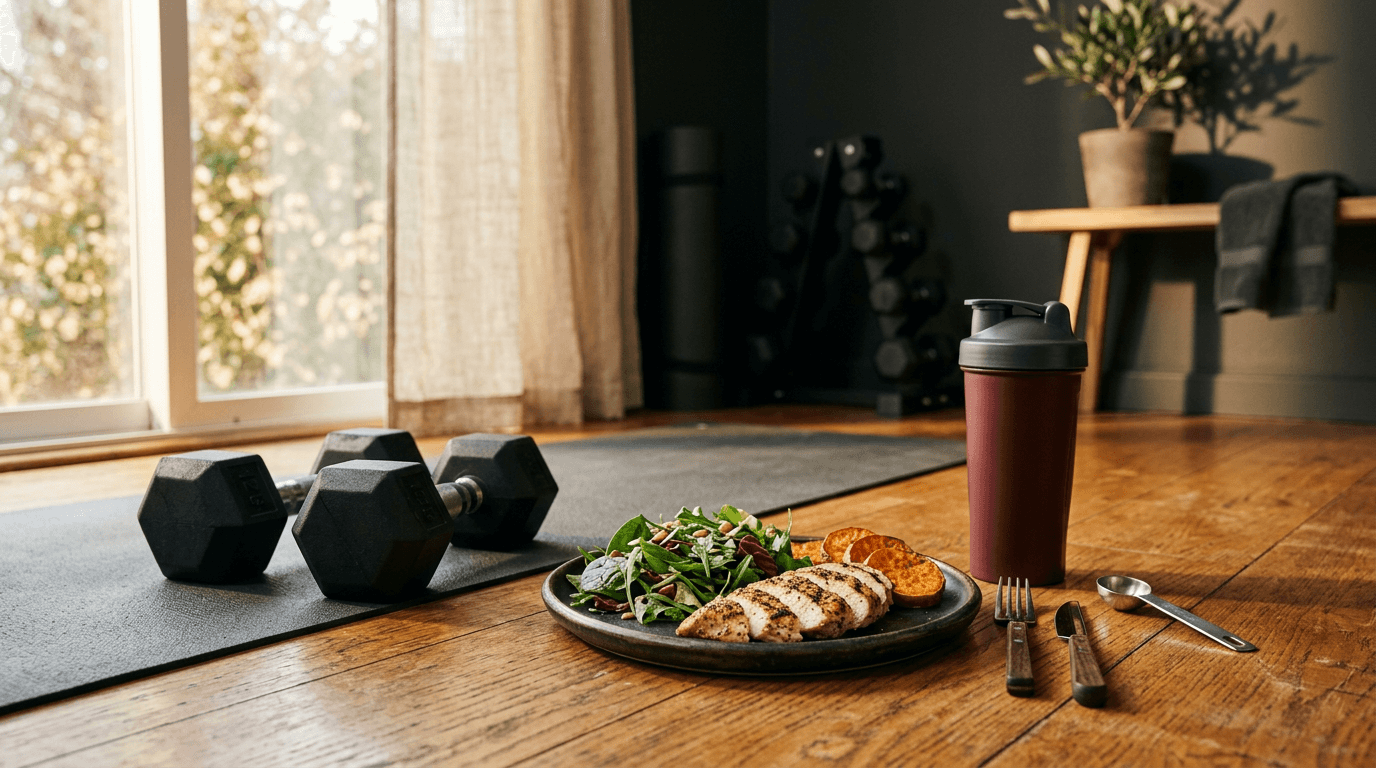
The 60-80% regain statistic at 12-24 months after stopping GLP-1 isn't a medication failure - it's a foundation failure. Members who built protein, strength, and sleep into the GLP-1 window keep most of the loss. Members who used the medication as a substitute for that work regain almost everything. Here's the maintenance plan that holds.
Why most regain happens
Without resistance training, 25-40% of GLP-1 weight loss comes off as lean mass. Lower lean mass means lower resting metabolic rate, lower glucose disposal, lower satiety signaling - the exact factors that help you eat less without trying. Stop the medication, and the body defends a lower-muscle, lower-metabolism setpoint.
Appetite returns within 2-4 weeks of stopping GLP-1. Without trained habits around protein, fiber, and meal structure, calorie creep is automatic. The medication never built the habits - it just suppressed the signal that made habits feel hard.
STEP-1 extension data: members who stopped semaglutide 2.4 mg regained ~2/3 of lost weight within 1 year. Members on SURMOUNT-4 maintenance trial held ~88% of loss at 88 weeks with continued tirzepatide.
The protein floor that protects lean mass
Target 0.7-1.0 g protein per lb of lean body mass (not total body weight) per day, distributed across 3-4 meals of 30-50 g each. For a 160 lb woman with 20% body fat (128 lb LBM), that's 90-130 g protein/day, with ~30 g per meal.
GLP-1 reduces hunger and appetite together - protein at meals can feel forced. Use protein-first ordering (eat the protein portion first), shakes if needed, and 25-30 g pre-bed protein on training days. Do not compromise the floor.
Why this works: dietary protein is the most-protective input against muscle loss in any caloric deficit, GLP-1 or otherwise. Multiple weight-loss trials show ~50% reduction in lean mass loss when protein hits the floor.
Strength training, not just cardio
Resistance training 2-3x/week with progressive overload. Compound movements (squat, deadlift, row, press) hit the most muscle mass per session. Sets of 6-12 reps, taken close to failure on the last set. 30-45 minute sessions are enough.
Cardio is fine for cardiovascular health but does not protect lean mass during fat loss. A pure-cardio-plus-GLP-1 protocol is the worst case for body composition long-term.
If you've never lifted, start with bodyweight progressions (squat, push-up, hinge) for 4 weeks, then transition to a barbell or dumbbell program. Coaching covers form and program progression.
Tapering vs stopping vs maintenance dosing
Cold-stop after reaching goal weight: highest regain risk. Appetite returns fast, lean mass loss is not yet stabilized. We do not recommend this approach.
Taper down (2-4 dose steps over 8-12 weeks) while monitoring weight and habits: lower regain than cold-stop, gives time to lock in protein and training. Most members do well here.
Maintenance dosing (continued lower-dose GLP-1 indefinitely): SURMOUNT-4 and STEP-5 data support continued use as effective long-term. Some states and insurance plans allow this; some don't. We screen state-specific access at intake.
What to do now
If you're on GLP-1 right now, lock the protein floor and a strength program before discussing dose changes. Coaching exists exactly for this - book a session if it's not already part of your plan.
If you've stopped and are regaining, message a provider. The right move depends on how much regain has happened, current labs, and whether the underlying foundation is now in place. Some members restart, some shift to coaching plus food work, some need a different metabolic conversation.