
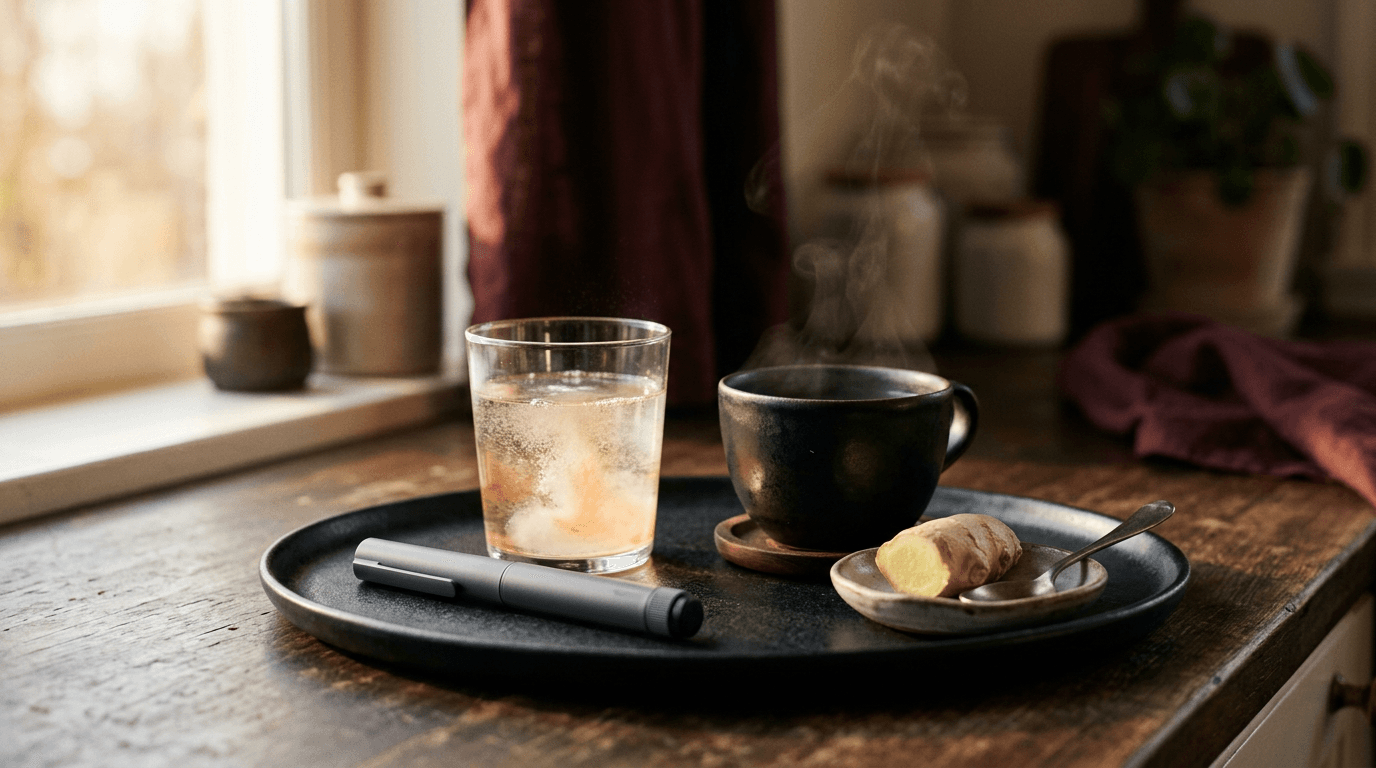
Most GLP-1 side effects are titration-related and resolve in 1-2 weeks at each dose step. A small number are red flags that need a same-day call. The difference matters - panic-stopping at week three loses the appetite signal you've been paying for; pushing through actual pancreatitis ends in the ER. Here's how to read the symptom map.
What's normal during titration
Nausea (20-44% in trials), reflux, constipation, fatigue, mild abdominal cramping - all concentrated in the first 1-2 weeks of each dose step. Frequency drops sharply after 2-3 weeks at the same dose.
Mild loss of taste preference, food aversion (especially fatty/fried foods, alcohol), reduced thirst signal. These are mechanism, not malfunction - the medication is doing its job.
Injection-site tenderness or small bruising for 24-48 hours is common. Rotating injection sites between abdomen, thigh, and upper buttock reduces local irritation.
How to manage the predictable stuff
Nausea: smaller meals, protein and complex carbs early in the day, ginger (capsules or tea), avoid trigger foods (greasy, very sweet) for the first week of each new dose. Ondansetron 4 mg is available under provider review for cases that don't settle.
Constipation: fiber 25-35 g/day, water target body weight in lbs / 2 in oz, magnesium glycinate 200-400 mg at night, occasional Miralax. If constipation persists past 7 days at any dose, message a provider.
Fatigue and dehydration: electrolytes (sodium 2-4 g/day, potassium from food, magnesium glycinate). Reduced thirst signal means many members under-drink in week 1-2. Track water intake actively.
The four red flags that need a call
Severe abdominal pain (especially upper-mid abdomen, radiating to back) lasting over 4 hours: rule out pancreatitis. Stop the medication and contact a provider same-day.
Persistent vomiting with inability to keep fluids down for over 24 hours: dehydration risk. Stop and contact a provider. ER if fluids cannot stay down at all or signs of severe dehydration appear.
Visual changes (especially diabetic members on insulin or sulfonylureas - rapid glycemic shifts can affect retina), or new/worsening severe headache: contact a provider before next dose.
Signs of gallbladder problem (right upper quadrant pain, fever, yellowing of skin/eyes): GLP-1 raises gallbladder event rate modestly. Get evaluated.
What stops the protocol vs holds the dose
Hard stop: confirmed pancreatitis, gallbladder removal needed, severe persistent gastroparesis, pregnancy. Off the medication, route to alternative care.
Dose hold: GI symptoms severe at current step but tolerable at last step. Drop back one step for 2-4 weeks, retry escalation. Many members complete therapy on a step or two below "max" and that's fine.
Switch molecules: tirzepatide tolerated when semaglutide wasn't (or vice versa). Provider-reviewed swap with a 1-2 week washout.
What to do now
If you're on a GLP-1 and side effects are inside the normal range, message your coach or provider for protocol tweaks - don't stop at the first uncomfortable week. Most resolve.
If you're considering GLP-1 but worried about side effects, run the Advanced lab panel and book the assessment. We screen the eligibility (eligibility article covers it) and set realistic expectations on what week one looks like.