
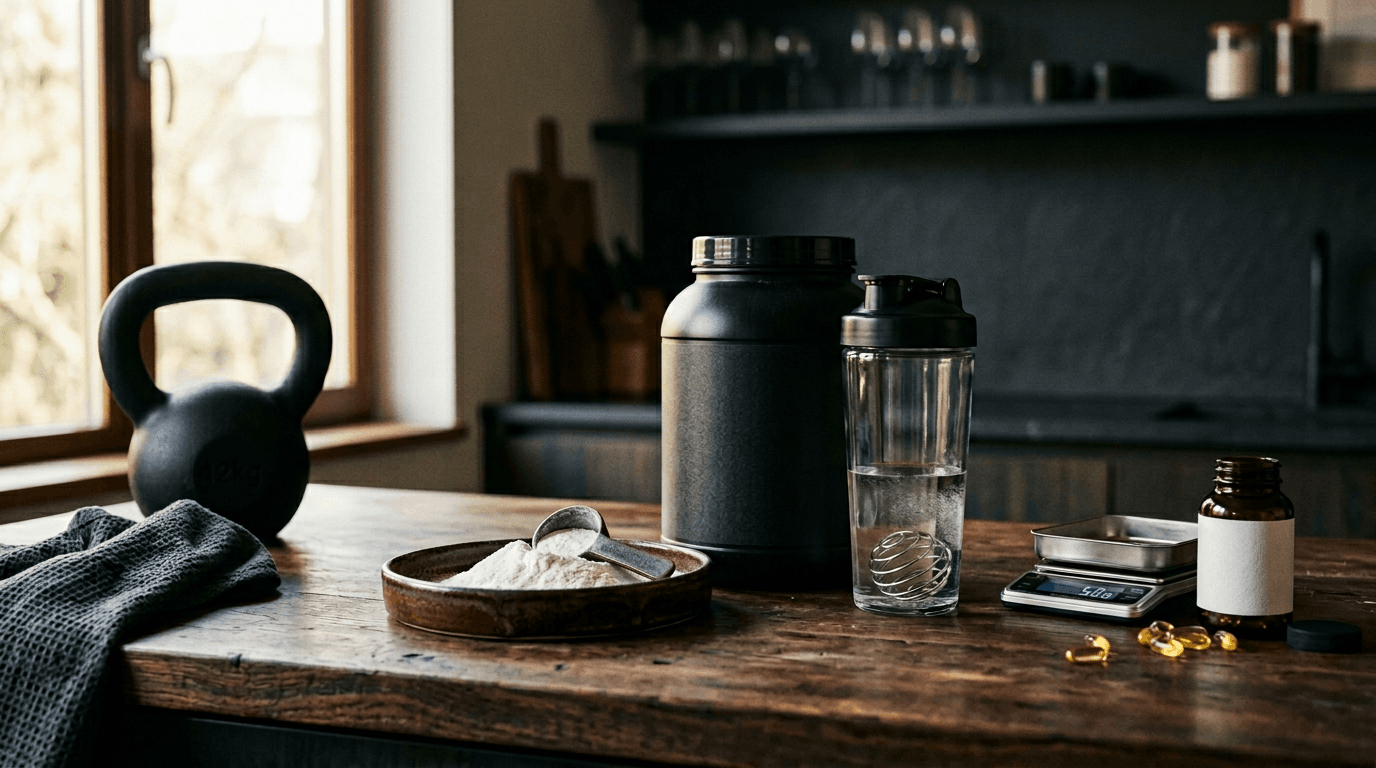
Creatine is still underused in women despite strong data on strength, recovery, and healthy aging support. Misconceptions about bloating and hormonal disruption persist. This review explains what studies show and how to dose practically.[5]
Why creatine matters for women
Creatine supports phosphocreatine availability for high-output activity, helping preserve strength and training quality over time.
In peri- and postmenopause contexts, preserving lean mass and power can meaningfully support long-term function.
Common myths vs reality
Weight changes are usually water-distribution shifts within muscle, not fat gain. Hormonal disruption claims are not supported by mainstream evidence at standard doses.
The biggest mistake is inconsistency, not overcomplex loading protocols.
Simple dosing framework
Three to five grams daily is typically sufficient for most adults. Daily adherence beats cycling complexity for long-run outcomes.
Hydration and baseline kidney function context should still be reviewed in medically complex cases.